
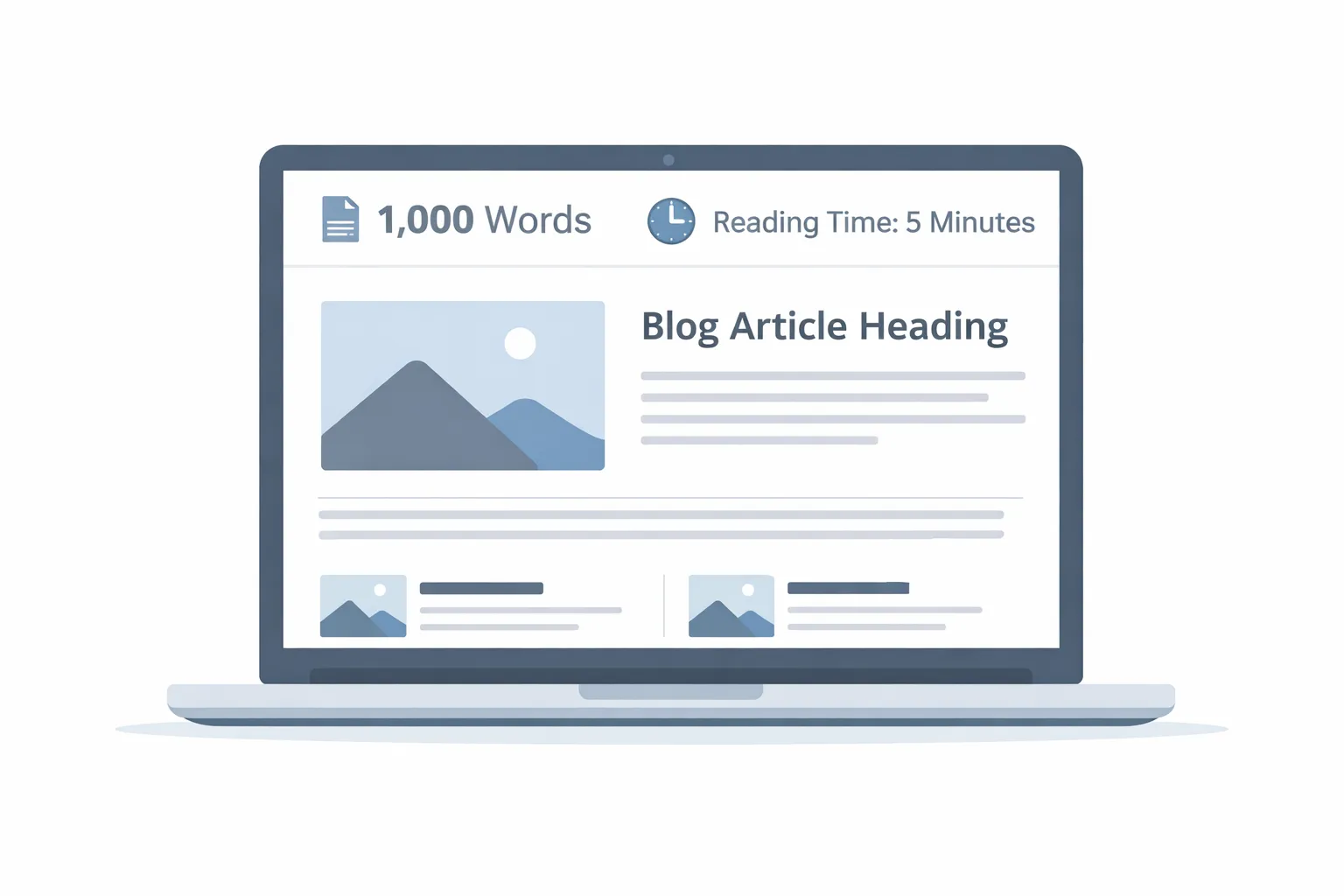
Your blog content may be powerful, informative, and well-written—but if readers don’t know how much time it will take to read, many will simply leave.
That’s where a Free Reading Time Calculator for Blog becomes essential.
In this complete guide, you’ll learn:
- What is a reading time calculator is
- Why it matters for blogs and SEO
- How to calculate reading time accurately
- How to add a free reading time calculator to your blog
- Best practices to improve engagement and user satisfaction
If you’re a blogger, content creator, marketer, or SEO professional, this guide is written exactly for you.
What Is a Free Reading Time Calculator for a Blog?
A Free Reading Time Calculator for Blog is an online tool that estimates how long it will take a reader to read your blog post.
It calculates reading time based on:
- Total word count
- Average reading speed (words per minute)
Most calculators use an average reading speed of 200–250 words per minute (WPM).
Example:
If your blog has 1,000 words, the estimated reading time is:
- ~5 minutes at 200 WPM
- ~4 minutes at 250 WPM
This simple estimate helps readers decide whether they have enough time to read your content.
Why Reading Time Matters for Blog Readers
Today’s readers are busy. They scan content and make instant decisions.
1. Better User Experience
When readers see the estimated reading time:
- They feel more in control
- They trust your content more
- They’re more likely to stay and read
A Free Reading Time Calculator for Blog sets clear expectations and reduces frustration.
2. Lower Bounce Rate
Readers are less likely to leave immediately when they know what they’re committing to.
3. Higher Engagement
Blogs that show reading time often experience:
- More scroll depth
- Longer time on page
- Higher completion rates
How a Free Reading Time Calculator for a Blog Works
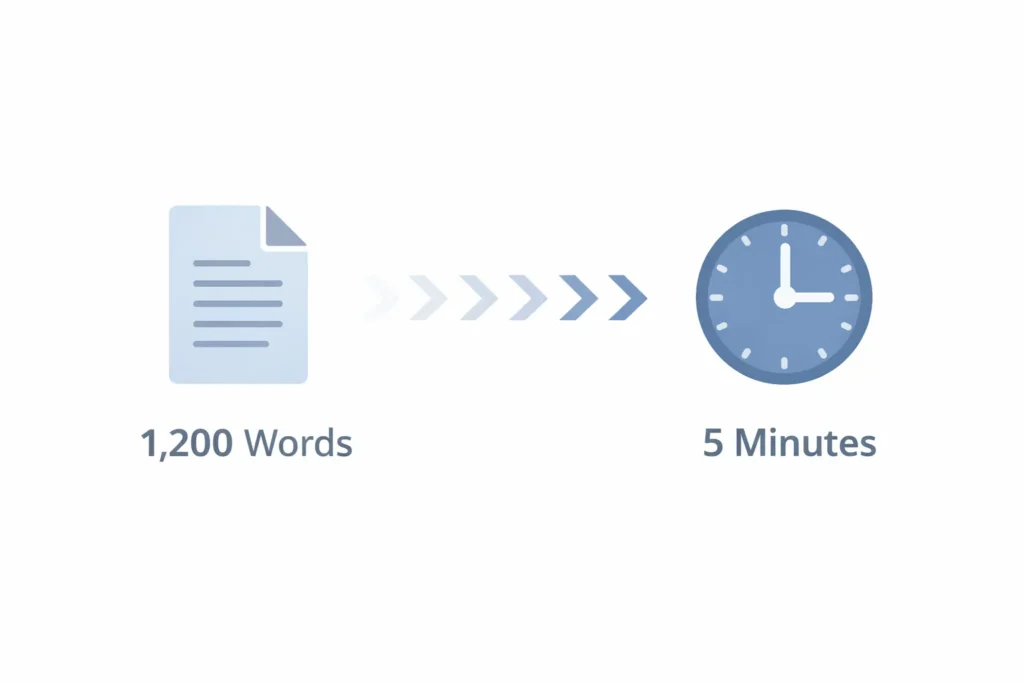
The logic behind a reading time calculator is simple.
Reading Time Formula
Reading Time = Total Words ÷ Words Per Minute
Standard Reading Speeds
| Reader Type | Words Per Minute |
|---|---|
| Slow Reader | 150 WPM |
| Average Reader | 200–250 WPM |
| Fast Reader | 300+ WPM |
Most blogs use 200 WPM as a safe and realistic average.
Reading Time Examples by Word Count
| Word Count | Reading Time (200 WPM) |
|---|---|
| 500 words | 2–3 minutes |
| 1,000 words | 5 minutes |
| 1,500 words | 7–8 minutes |
| 2,000 words | 10 minutes |
| 3,000 words | 15 minutes |
This table alone answers many common user searches related to the Free Reading Time Calculator for Blog.
Who Should Use a Free Reading Time Calculator for a Blog?
This tool is useful for many audiences:
Bloggers & Writers
- Plan article length
- Improve readability
- Increase reader satisfaction
SEO Professionals
- Improve engagement metrics
- Optimize content length
- Reduce pogo-sticking
Students & Educators
- Estimate reading workload
- Plan study time efficiently
Content Marketers
- Create conversion-focused content
- Match reading time with funnel stages
Free Reading Time Calculator for Blog vs Manual Calculation
Manual Calculation
Pros:
- Simple math
Cons: - Time-consuming
- Easy to miscalculate
Free Reading Time Calculator for Blog
Pros:
- Instant results
- Accurate estimates
- No effort required
For professional blogs, using a free online calculator is always better.
Best Free Reading Time Calculators for Blog (Online Tools)
Here are some popular options bloggers often use:
1. Simple Online Reading Time Calculators
- Paste text
- Get instant reading time
- Free to use
2. Word Counter + Reading Time Tools
- Show word count
- Estimate reading time
- Helpful for writers
3. Blog CMS Plugins (WordPress)
- Auto-calculate reading time
- Display it on every post
These tools make it easy to implement a Free Reading Time Calculator for a blog without technical skills.
How to Add a Free Reading Time Calculator to Your Blog
Method 1: WordPress Plugin (Easiest)
If you use WordPress:
- Install a reading time plugin
- Activate it
- It automatically shows reading time on posts
Method 2: Online Calculator + Manual Display
- Calculate reading time
- Add it manually at the top of the post
Method 3: Custom Code (Advanced)
Developers can calculate reading time dynamically using JavaScript or backend logic.
Where Should Reading Time Be Displayed?
Best placement options:
- Under the blog title
- Near the publish date
- Before the introduction
This makes the Free Reading Time Calculator for Blog visible immediately.
Does Reading Time Affect SEO?
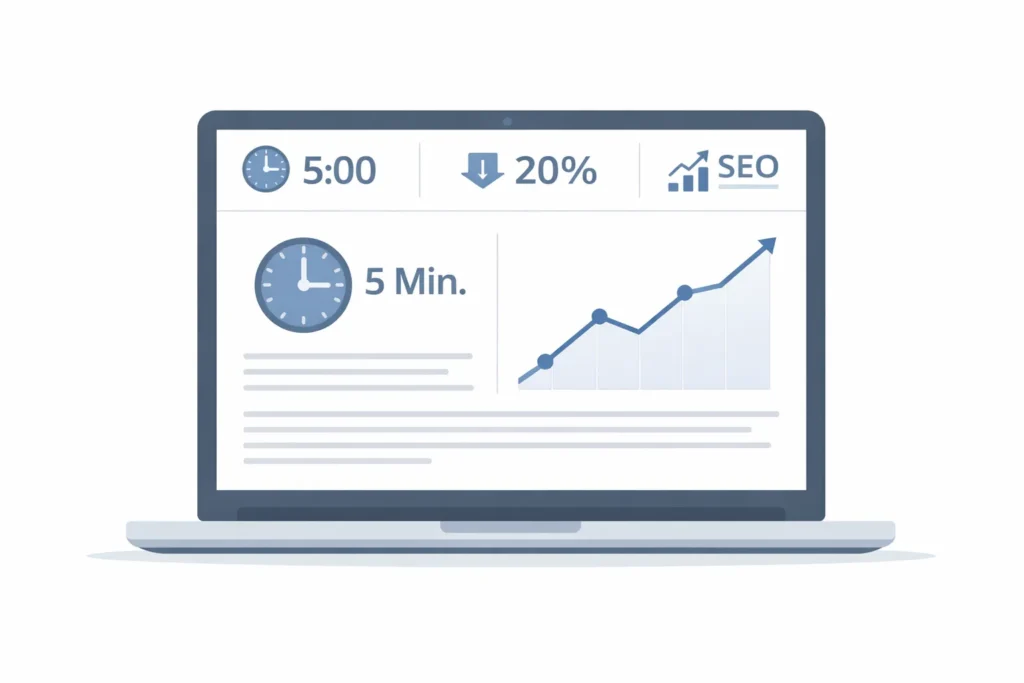
Directly? NO
Indirectly? YES.
How It Helps SEO:
- Improves time on page
- Reduces bounce rate
- Encourages full article reads
- Signals content quality
Google values user satisfaction, and reading time improves that experience.
Ideal Reading Time for Different Blog Types
| Blog Type | Ideal Reading Time |
|---|---|
| Short Updates | 2–4 minutes |
| Informational Blogs | 5–8 minutes |
| In-Depth Guides | 8–15 minutes |
| Tutorials | 10–20 minutes |
A Free Reading Time Calculator for a blog helps match content length with user intent.
How to Reduce Reading Time Without Cutting Value
Sometimes blogs feel too long. Here’s how to optimize:
- Use short paragraphs
- Add bullet points
- Use clear subheadings
- Avoid unnecessary filler
- Add visuals for faster understanding
These tips improve readability without hurting SEO.
Common Mistakes Bloggers Make with Reading Time
Using unrealistic WPM
Hiding reading time
Overloading content with fluff
Ignoring mobile readers
Always keep reading time honest and visible.
Why Every Blog Needs a Free Reading Time Calculator in 2026
Content competition is higher than ever.
Users want clarity, speed, and value.
A Free Reading Time Calculator for Blog:
- Builds trust
- Improves UX
- Supports SEO
- Increases engagement
It’s no longer optional—it’s essential.
Final Thoughts
A Free Reading Time Calculator for Blog is a small feature with a massive impact.
It helps readers manage their time, improves engagement, supports SEO, and builds trust in your content.
If you care about your audience—and your rankings—this is one tool you should never ignore.
Faqs
Most readers read between 200 and 250 words per minute.
Yes, it provides a realistic estimate based on average reading behavior.
Yes, especially for long-form content.
Some calculators add extra seconds for images, others don’t.
Yes. Informed readers are more likely to stay and convert.
Yes, for most blogs. Paid tools are optional.
Not directly, but it improves engagement signals.