
Backlinks fuel rankings, but the words attached to them matter just as much. If your anchor text mix looks unnatural, Google may penalize your site — even if every link is from a great source. So understanding a healthy anchor text ratio is critical in 2026.
Smart marketers do not just chase backlinks. They balance their anchors carefully to stay safe, look natural, and rank stronger over time.
This complete guide explains what anchor text is, the ideal ratio for safe SEO, common mistakes to avoid, and the free tool to audit your link profile in seconds.
What Is Anchor Text?
Anchor text is the clickable text inside a hyperlink. For example, in Anchor Text Distribution, the words “Anchor Text Distribution” form the anchor.
So anchor text gives both users and Google a hint about the destination page’s content.
Why Anchor Text Ratio Matters in SEO
- Google uses anchors to understand topic relevance
- Over-optimized anchors trigger penalties
- Natural ratios protect you from Penguin updates
- Balanced anchors look more organic
- Helps grow long-term link authority safely
Therefore, anchor text ratio is one of the most overlooked but critical SEO signals.
Types of Anchor Text You Should Know
1. Branded Anchors
Use your brand name (e.g., “Smart SEO Toolz”). The safest type — Google loves natural brand mentions.
2. Naked URLs
Direct URLs like https://example.com count as anchors. They look organic and pose zero risk.
3. Generic Anchors
Examples: “click here”, “read more”, “learn more”. So these are common, neutral, and safe.
4. Exact Match Anchors
Anchors exactly match your target keyword. Powerful, but dangerous if overused.
5. Partial Match Anchors
A blend of your keyword with extra words (e.g., “best SEO keyword tools online”). They feel natural and SEO-friendly.
6. Image Anchors
The alt text of an image acts as the anchor. So always use descriptive alt text via our Alt Attribute Checker.
What Is a Healthy Anchor Text Ratio?
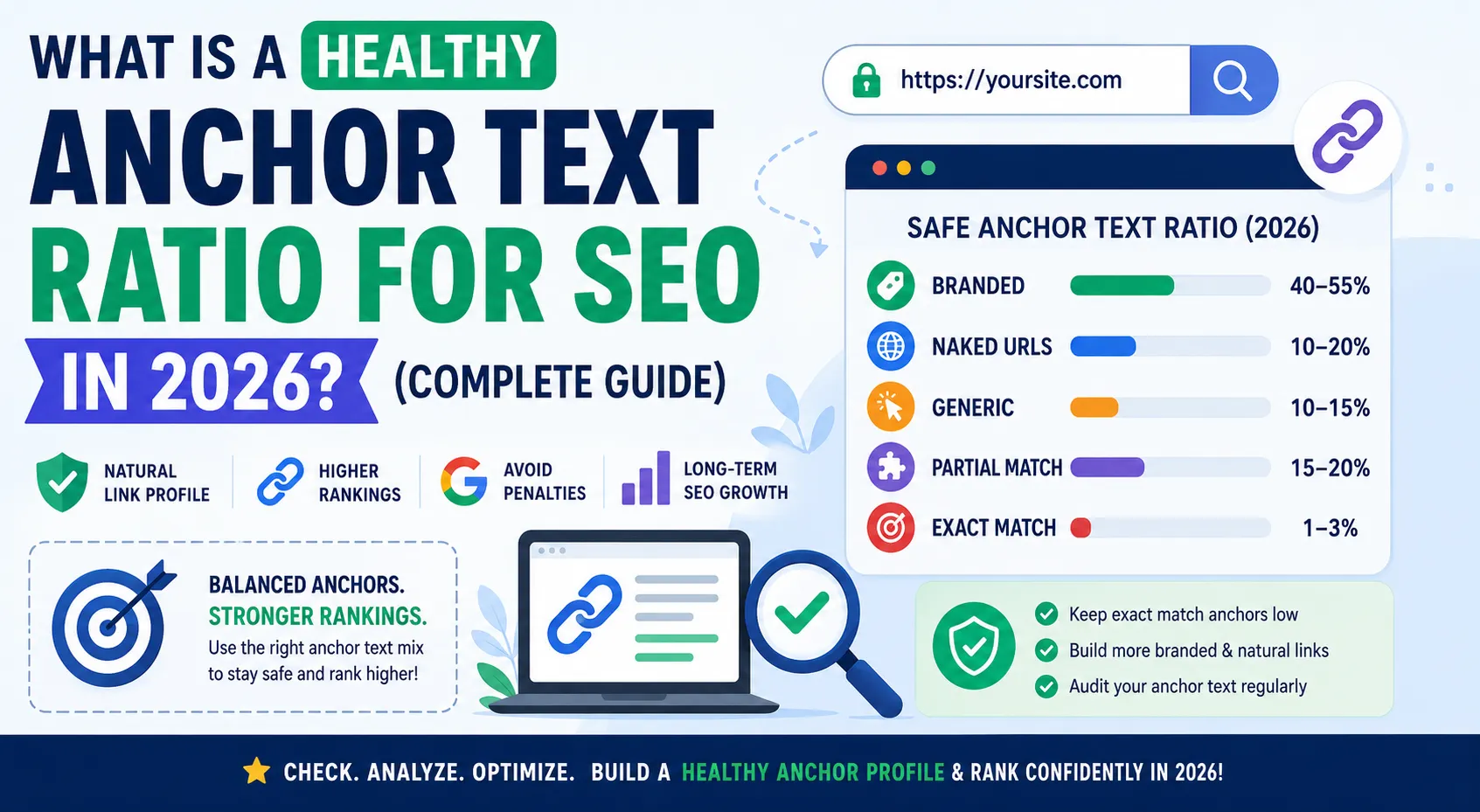
There is no single perfect mix, but smart SEOs target a natural distribution. Aim for these safe ratios:
| Anchor Type | Safe Range |
|---|---|
| Branded | 40–55% |
| Naked URLs | 10–20% |
| Generic | 10–15% |
| Partial Match | 15–20% |
| Exact Match | 1–3% |
So aim to keep exact match anchors low and brand mentions high.
Why Over-Optimized Anchor Text Hurts SEO
- Triggers Google’s Penguin spam filters
- Marks the link profile as manipulated
- Causes ranking drops or de-indexing
- Reduces brand credibility on third-party sites
- Increases risk of manual penalties
Even one round of unnatural anchor patterns can damage SEO for months.
How to Audit Your Anchor Text Ratio
Step 1 — Use Our Free Anchor Text Distribution Tool
Open our free Anchor Text Distribution tool. Paste your URL to see the exact mix of anchors pointing to your page.
Step 2 — Compare With the Safe Range
Match your data with the table above. Spot any anchor type that exceeds healthy limits.
Step 3 — Build More Diverse Anchors
If your exact match is too high, build more branded or partial match anchors via guest posts and partnerships.
Step 4 — Disavow Spammy Anchors
Find toxic or spam anchors using our Blacklist IP Checker and disavow them in Google Search Console.
Anchor Text Best Practices for 2026
- Always mix branded + naked + generic + partial
- Use exact match anchors sparingly
- Avoid spammy or unrelated anchors
- Earn backlinks with diverse language
- Audit anchor profile every 3 months
Smart anchor habits build authority safely for the long haul.
Common Anchor Text Mistakes
- Using the same anchor on every backlink
- Stuffing keywords into multiple links
- Forgetting brand anchors completely
- Buying anchor-heavy guest posts
- Skipping audits after big link drops
Even good intentions can hurt SEO without proper anchor planning.
How to Diversify Anchors Naturally
- Encourage brand mentions in your outreach
- Vary your guest post anchor text
- Get mentioned in newsletters and podcasts
- Earn directory listings with naked URLs
- Use long-tail variations from our Long Tail Keyword Generator
Real diversity always looks more natural to Google’s link models.
Smart Tools That Pair With Anchor Text Audits
- Anchor Text Distribution — full anchor mix audit
- Competitor Backlinks Checker — analyze rival anchors
- Domain Authority Checker — measure link strength
- Keyword Position Checker — track ranking impact
Used together, they protect your link profile and grow rankings safely.
Bonus: Anchor Strategy Based on Site Age
| Site Age | Strategy |
|---|---|
| 0–6 months | Mostly branded + naked URLs |
| 6–12 months | Slowly add partial match |
| 1–2 years | Balance branded, partial, generic |
| 2+ years | Add a few exact match anchors |
So aging the anchor mix matches how organic authority grows naturally over time.
Final Thoughts
Maintaining a healthy anchor text ratio is one of the smartest moves in modern SEO. With a balanced mix, you grow safely, look natural to Google, and avoid hidden penalties that crush even great content.
Start now with our free Anchor Text Distribution tool. Audit your link profile, fix risky overlaps, and build sustainable SEO authority all year.
FAQs
A balanced ratio uses 40–55% branded, 10–20% naked URLs, 10–15% generic, 15–20% partial match, and only 1–3% exact match.
Not if used sparingly. Over 5% exact match anchors looks unnatural and may trigger penalties.
Use a free anchor text distribution tool. Paste your URL to see the exact mix of anchors pointing to your page.
Branded and naked URL anchors. They look natural and pose almost zero risk to your SEO.
Yes. Internal anchors guide Google through your site. Use descriptive but varied phrasing for best results.
Every 3 months. Anchor profiles shift fast, especially during active link building.
Yes. Build diverse, branded anchors and disavow toxic ones in Search Console for full recovery.