
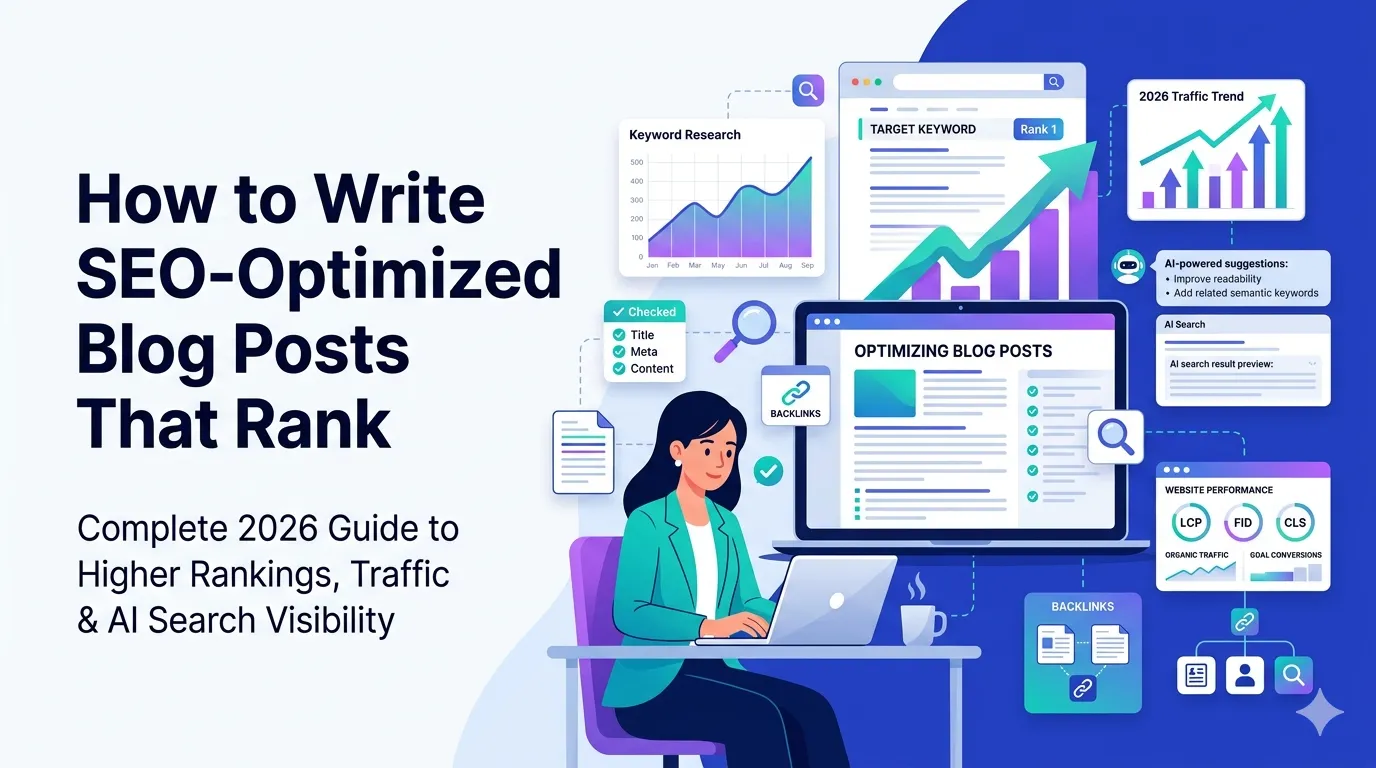
Anyone can publish blog posts. Yet only a few know how to write SEO-optimized blog posts that actually rank. In 2026, with AI and competition rising fast, smart writing wins — not just more writing.
SEO-optimized blog posts blend strong keywords, clean structure, and reader-first storytelling. So your work climbs Google fast and earns real traffic, leads, and authority.
This complete guide reveals every step to write SEO-optimized blog posts in 2026, with free tools, templates, and tips that work on any niche.
What Are SEO-Optimized Blog Posts?
SEO-optimized blog posts are content pieces that follow proven SEO rules. They target the right keyword, satisfy search intent, and offer real value to readers.
So they not only attract clicks but also earn rankings, backlinks, and conversions over time.
Why SEO-Optimized Blog Posts Matter in 2026
- Higher rankings on Google and AI search
- Better featured snippet performance
- Stronger CTR and dwell time
- Easier link building outreach
- Long-term, compounding organic growth
So every SEO-optimized post becomes an asset that earns traffic for years.
Step-by-Step: How to Write SEO-Optimized Blog Posts
1. Pick One Winnable Keyword
Use our Keyword Suggestion Tool and validate competition with our Keyword Difficulty Checker.
2. Study Search Intent
Check the top 10 SERPs. Match your post type to what users want — guide, list, comparison, or tool.
3. Build a Smart Outline
Plan H1, H2s, and H3s before you write. Our Heading Tag Analyzer helps you compare with competitors.
4. Write a Magnetic Intro
Include the keyword in the first 100 words. So Google and readers know what the post is about instantly.
5. Use Clean, Short Paragraphs
2–4 lines per paragraph. Easier to scan on mobile and AI search.
6. Add Semantic Keywords
Sprinkle related terms naturally in H2s and H3s. They help Google understand topical depth.
7. Keep Keyword Density Around 1%
Audit naturally with our Keyword Density Checker.
8. Add Internal Links
Connect 3–5 related blog posts using descriptive anchors.
9. Add External Links to Trusted Sources
Cite stats, studies, and tools where useful. So Google sees you reference real research.
10. Add Schema and FAQs
Use our Schema Generator for Article and FAQ markup.
11. Optimize Title & Meta Description
Use our Title & Meta Length Checker to keep them perfect.
12. Improve Readability
Aim for Flesch 60–80 using our Readability Score Checker.
13. Compress and Optimize Images
Use our Image Compressor and add clean alt text via our Alt Attribute Checker.
14. Speed Up the Page
Audit Core Web Vitals via our Page Speed Test.
15. Add a Strong CTA
Every post should guide the reader to a tool, signup, or product page.
What Great SEO Blog Posts Always Include
- One main keyword, clear intent
- Clean H1–H3 structure
- Conversational, scannable writing
- Original examples or case studies
- Schema markup and FAQ block
- Strong meta tags and clean URL
Together, these signals build authority pages Google loves to rank.
Best Blog Post Structure for SEO in 2026
- Magnetic intro with keyword in first 100 words
- Quick context section (“What Is X?”)
- Why it matters now
- Step-by-step or list-based main body
- Examples or use cases
- Tool recommendations
- Common mistakes
- FAQ block
- Final thoughts with CTA
This structure consistently earns featured snippets and AI search mentions.
SEO Writing Mistakes to Avoid
- Targeting too many keywords at once
- Skipping the meta title or description
- Writing without studying SERPs
- Stuffing keywords unnaturally
- Ignoring readability and structure
Smart writers avoid these silently-costly mistakes.
How AI Changes SEO Blog Writing in 2026
- AI Overviews reward clear, structured content
- Schema and FAQs become AI fuel
- Helpful, original insight beats AI fluff
- Conversational tone matches voice search
- Editorial review now matters more than ever
So smart human + AI editing wins in 2026.
Best Free Tools for SEO Blog Writing
- Keyword Suggestion Tool
- Keyword Density Checker
- Readability Score Checker
- Title & Meta Length Checker
- Schema Generator
- Heading Tag Analyzer
Used together, these tools turn every blog post into a publish-ready SEO asset.
Bonus: Quick Blog Post Editing Workflow
- Read the draft out loud
- Trim fluff and repeated transitions
- Validate keyword placement
- Run readability and density checks
- Confirm meta tags and slug
- Add schema and FAQ block
- Press publish — then promote
So even AI drafts become rank-ready when edited like a pro.
Final Thoughts
Learning how to write SEO-optimized blog posts is one of the highest-ROI marketing skills in 2026. With one solid template and free tools, you can build organic traffic month after month.
Start now with our free Website SEO Score Checker to confirm your work is ready. Then write smarter, edit faster, and grow steadily across 2026.
FAQs
Pick one keyword, match search intent, structure with clean H1–H3 headings, and optimize meta tags, images, and readability.
Most ranking posts run 1,200–2,500 words. Length should match the depth needed to fully answer the query.
Use it in the title, slug, H1, first 100 words, meta tags, and naturally throughout the body.
Yes. Article and FAQ schema help win featured snippets and AI Overviews easily.
Intro, what-is, why-it-matters, step-by-step, examples, tools, mistakes, FAQ, and final thoughts with a CTA.
Very. Better readability means longer dwell time, more shares, and stronger AI Overview chances.
Yes — but always edit. Add real insights, examples, and your unique voice to make AI content rank-worthy.