
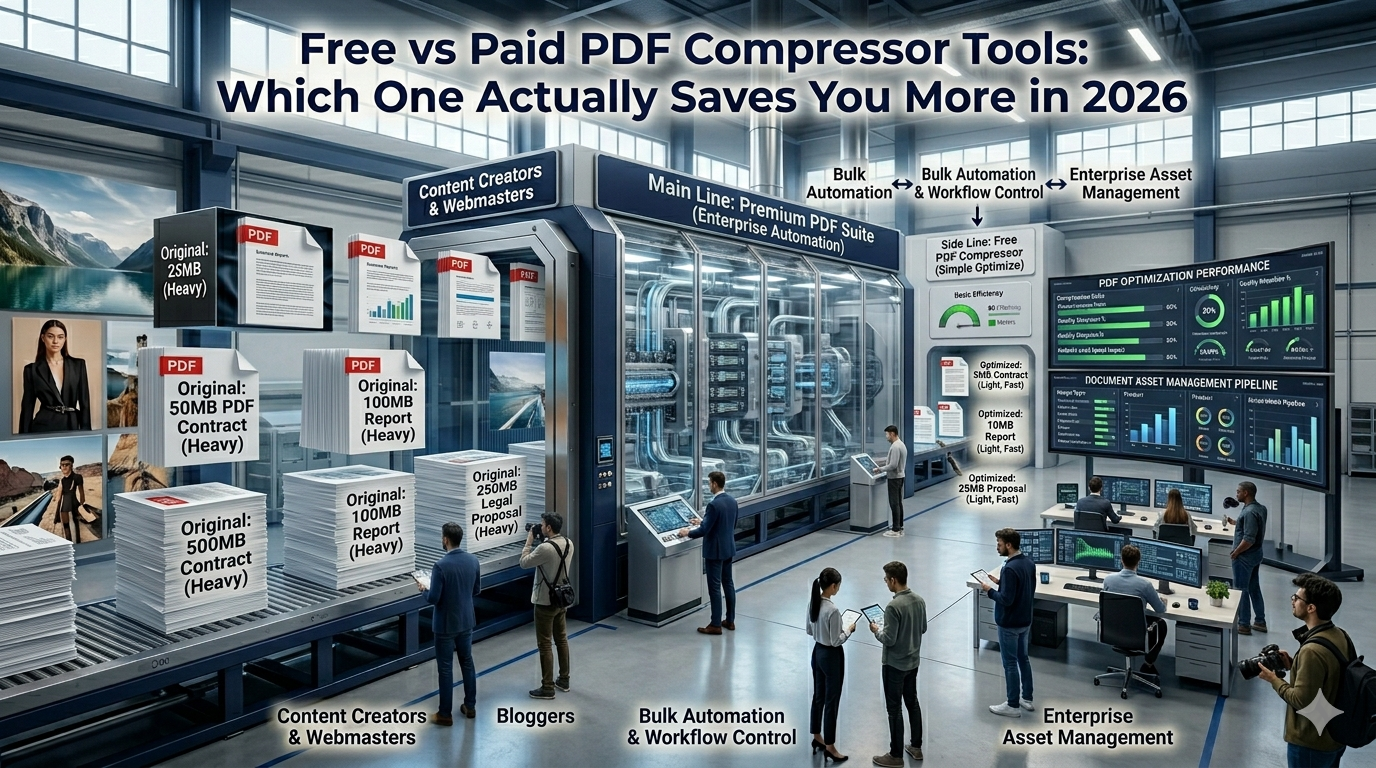
Choosing between free and premium services feels overwhelming during budget reviews. Comparing free vs paid PDF compressor options reveals when each option earns its place. This guide walks beginners through every step needed to pick the right tool without overspending.
Premium suites tempt buyers with sleek dashboards yet require monthly fees. Free tools complete the same core task in seconds. The right comparison keeps your workflow honest and your wallet healthy.
Why this comparison matters for every team
PDF compression supports email delivery, web uploads, and archive storage daily. Picking the wrong tier wastes either time or money over weeks.
Solo freelancers often need a quick shrink before emailing proposals. Additionally, enterprise teams handle thousands of files monthly with strict policies. Such variety supports careful comparison whether usage is light or heavy.
Common scenarios that demand a free vs paid look
Several everyday workflows call for honest comparison. Recognize them before paying for premium subscriptions.
- Shrinking quarterly client reports under email size limits
- Uploading proposals to procurement portals with file caps
- Compressing scanned receipts during tax season
- Reducing onboarding manuals for new remote hires
- Storing legal contracts inside cloud archives
- Sending pitch decks to investors with minimal latency
Step-by-step process to compare PDF compressors
Follow this sequence whenever a procurement decision arises. Each step protects time and budget.
List your real volume needs
Estimate how many files you compress weekly across the team. Tally average sizes and target reductions clearly. Save the volume snapshot inside a procurement note.
Test free tools against premium claims
Run identical sample files through both options. Compare final size, quality, and time to download honestly. Document the difference inside the same procurement note.
Weigh security and privacy
Confirm whether either option uploads files to cloud servers. Pick browser-only tools whenever confidential content is involved. Document the chosen workflow inside your security guide.
Best practices for sustainable PDF habits
Beyond the tool, supporting routines stretch every dollar. Apply them every quarter.
Archive original files alongside compressed copies for safety. Document compression settings inside team handbooks. Train colleagues so everyone follows the same approach.
| Factor | Free Tool | Paid Tool |
|---|---|---|
| Cost | Zero | Monthly subscription |
| Batch processing | Limited | Often unlimited |
| Privacy | Browser-only options exist | Cloud upload required |
| Support | Community | Premium SLA |
Tools that simplify the entire workflow
Many free tools rival premium output for typical files. Bookmark a favorite and pair it with strict file naming. The right pick balances quality, privacy, and cost.
Try our PDF Compressor directly inside your browser without sign-up. Need to split or merge files too? Pair it with the PDF Merger for full document polish. Teams also love combining it with the Image Compressor for richer assets.
Common mistakes beginners should avoid
Several pitfalls trip up new buyers. Watch out for these traps before signing contracts.
- Trusting marketing claims without testing real sample files
- Ignoring privacy implications of cloud-based compression
- Forgetting hidden costs like seat-based pricing tiers
- Mixing premium and free workflows without documentation
- Skipping integration tests with your team’s email clients
When premium subscriptions still earn their keep
Some teams justify premium suites because of large-scale batch processing, advanced redaction, or contracted SLAs. Document the exact reason and revisit it quarterly. Otherwise free tools often suffice.
Pair the workflow with our Word Counter when reviewing copy-heavy PDFs. Steady comparison, honest testing, and disciplined notes turn procurement choices into manageable detail. Each evaluation supports the next confident purchase.