
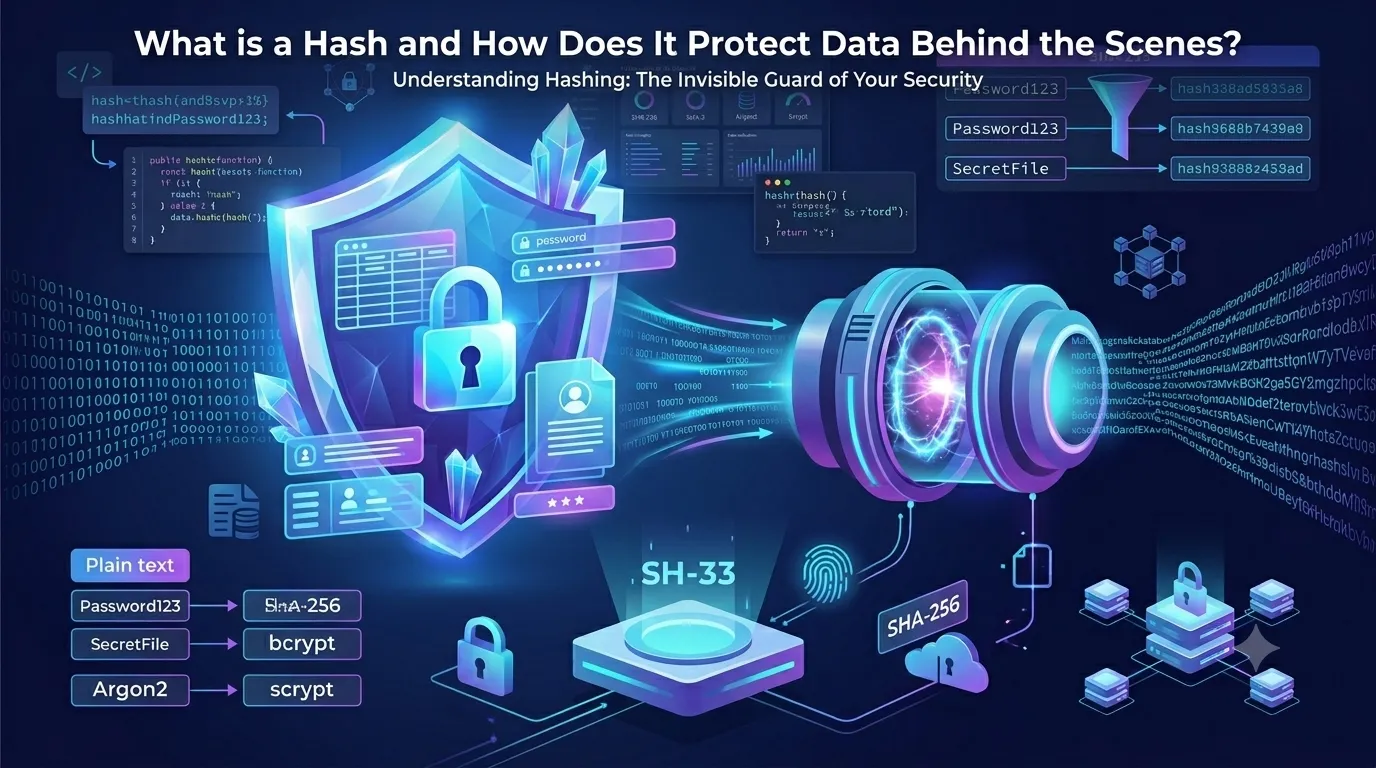
A hash is a one-way function that turns any input into a fixed-length string of letters and numbers.The same input always produces the same result, but you cannot reverse it back into the original data. However, this one-way behavior is exactly what makes it secure.
Power password storage, file integrity checks, blockchain, and many APIs. This guide explains what a hash is in plain words and how a free generator lets you experiment with them.
What is a hash in simple terms?
A function takes any data, such as a word, a file, or a message, and produces a fixed-length code that looks random. However, this output remains consistent for the same input. The code is called the hash or digest.
Different inputs almost always produce different hashes. Even a one-character change in the input creates a completely different output, and this is the property that makes hashes so useful for security.
Why are hashes useful?
Hashes let you check whether two pieces of data are identical without sharing the original data, and this makes verification possible.
They are perfect for storing passwords, verifying downloads, and detecting tampering.
Downloading a file and comparing its hash to the one on the official site confirms the file was not changed in transit.Matching hashes means the file is trustworthyDifferent values mean something is wrong.
Where you use hashes every day
- Password storage in databases
- File and software integrity checks
- Git commit IDs and code versioning
- Cookies, JWTs, and digital signatures
- Blockchain transactions and proof of work
Common hash algorithms
MD5 and SHA-1 are older algorithms still used for checksums but considered weak for security. SHA-256 and SHA-3 are modern, strong choices for cryptographic use. Bcrypt, scrypt, and Argon2 are designed for password storage.
Choosing the right algorithm matters. SHA-256 is great for general integrity, while Argon2 or bcrypt should handle user passwords, since they include built-in protections against brute-force attacks.
How hashing protects passwords
When you sign up, sites should hash your password before saving it. When you log in, they hash the entered password and compare it to the stored hash. The plain password is never stored.
Strong password hashing also adds a unique salt to each password, so identical passwords get different hashes. This prevents attackers from using precomputed rainbow tables to crack many accounts at once.
How to try hashing yourself
- Open a free MD5 hash generator or SHA-256 hash generator
- Paste a short phrase and see the hash
- Change one character and watch the entire hash change
- Compare two hashes to confirm a file has not been tampered with
- Pair this with a password strength checker for everyday security checks
Hashing myths to leave behind
- “Hashing equals encryption” — encryption is reversible, hashing is not
- “MD5 is fine for passwords” — MD5 is too fast and broken for password use
- “A long hash is automatically safe” — choice of algorithm and salting matter more than length
- “Hashed data cannot be cracked” — weak passwords can still be guessed even after hashing