
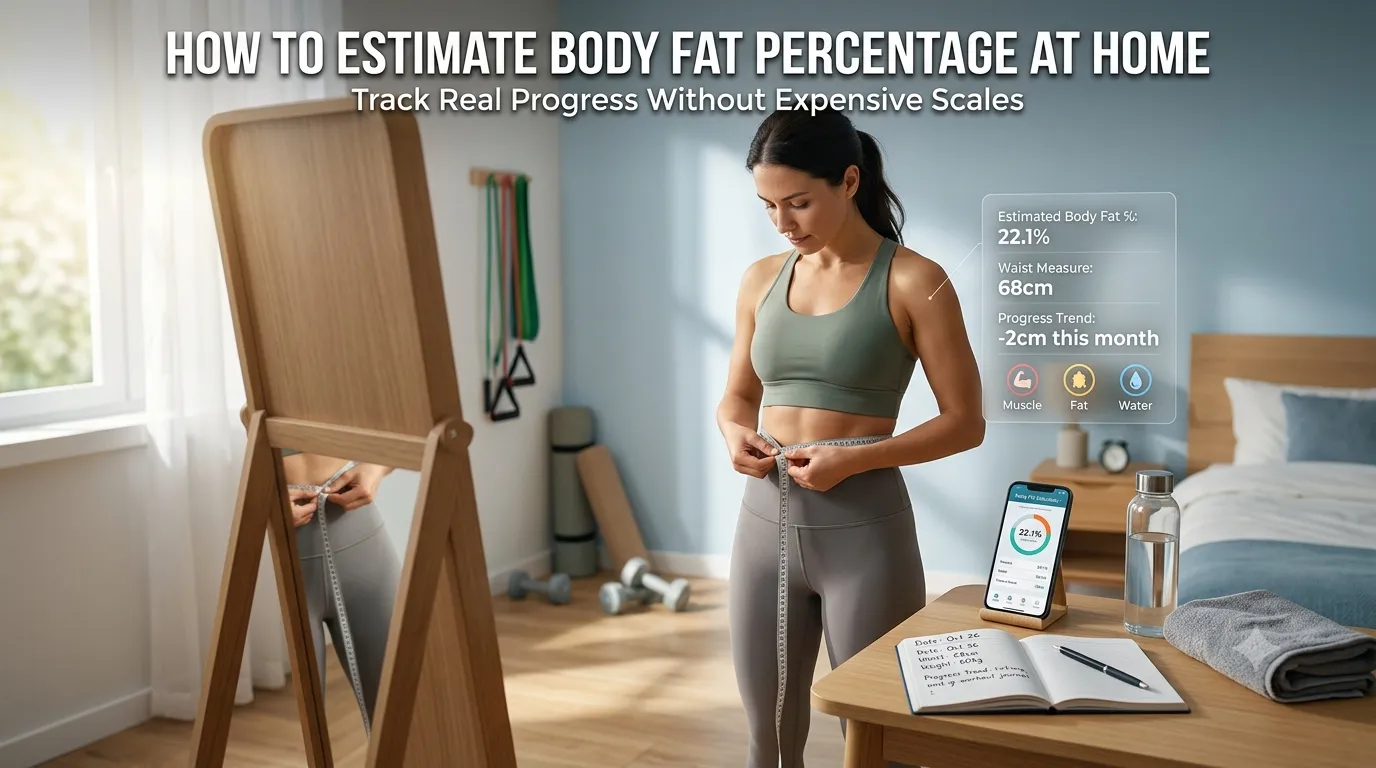
Tracking real progress feels frustrating when the bathroom scale ignores muscle gain. Learning to estimate body fat percentage at home turns scattered measurements into a clearer wellness picture. This guide walks beginners through every approach needed to track composition without buying lab equipment.
Weight alone hides progress whenever you replace fat with muscle through training. A simple percentage reveals composition changes that pure scales completely miss. The right method keeps motivation high during steady transformation phases.
Why percentage tracking beats raw weight numbers
Two people of identical weight can carry vastly different composition profiles. Composition data explains why clothes fit better even when the scale barely moves.
Trainers and nutritionists tailor programs based on these baseline percentages. Additionally, athletes use composition trends to confirm sport-specific conditioning gains. Such clarity drives smarter decisions whether you train casually or competitively.
Common scenarios that benefit from at-home estimates
Several wellness goals demand more than a basic weight reading. Recognize them and reach for a calculator immediately.
- Tracking transformation progress during a structured twelve-week training program
- Confirming recomposition results when scale weight remains nearly stable
- Setting realistic benchmarks for amateur photo shoots or stage prep
- Monitoring postpartum recovery alongside doctor-approved exercise plans
- Comparing baseline percentages across different family members at home
- Auditing progress before booking a professional DEXA scan appointment
Step-by-step process to estimate body fat percentage
Follow this sequence for the most consistent results possible. Each step keeps numbers comparable across weeks.
Take measurements under consistent conditions
Measure waist, neck, and hip circumference first thing in the morning. Use the same tape and identical clothing each session for fair comparisons. Record values immediately to prevent forgetting after several attempts.
Plug values into a reliable calculator
Choose a method like the U.S. Navy formula or skinfold equation. Enter sex, height, and circumference values exactly as recorded earlier. Save the resulting percentage along with the measurement date for trend tracking.
Repeat every two to four weeks
Look for steady directional changes rather than daily fluctuations. Hydration, sodium, and sleep all influence weekly readings noticeably. Trends matter far more than any single number.
Best practices for sustainable composition tracking
Beyond the calculator, supporting habits keep your numbers reliable. Apply them every month with patience.
Combine composition data with progress photos for honest visual reference. Keep a simple log inside a notes app for fast retrieval anywhere. Discuss trends with a coach or doctor when major changes appear.
| Method | Setup | Best For |
|---|---|---|
| U.S. Navy formula | Tape measure only | At-home routine |
| Skinfold calipers | Inexpensive tool | Frequent tracking |
| Bioelectrical scale | Smart scale | Quick weekly checks |
| DEXA scan | Clinic visit | Annual benchmark |
Tools that simplify every check-in
Manual math invites mistakes during busy weeks. Dedicated calculators handle the formulas instantly without confusion. Bookmark a favorite and revisit it every time you measure.
Try our Body Fat Calculator directly inside your browser without sign-up. Want to compare against a weight benchmark? Pair it with the BMI Calculator for a fuller picture. Nutrition fans also love combining it with the Calorie Calculator for energy planning.
Common mistakes beginners should avoid
Several pitfalls trip up new measurers. Watch out for these traps before they hide real progress.
- Measuring at different times of day with inconsistent hydration levels
- Pulling the tape too tight which artificially shrinks circumference values
- Switching methods every check-in instead of staying with one approach
- Comparing yourself to photos rather than tracking your own trajectory
- Setting unrealistic goals that ignore healthy biological percentage ranges
When professional measurement is worth it
At-home estimates work for trend tracking but lack laboratory precision. Annual scans confirm progress and double-check tape-based formulas. Treat the calculator as a frequent companion to occasional clinical readings.
Combine the workflow with our Percentage Calculator when calculating change-over-time figures. Steady habits, consistent tools, and honest data unlock genuine wellness progress. Each measurement supports the next confident decision.