
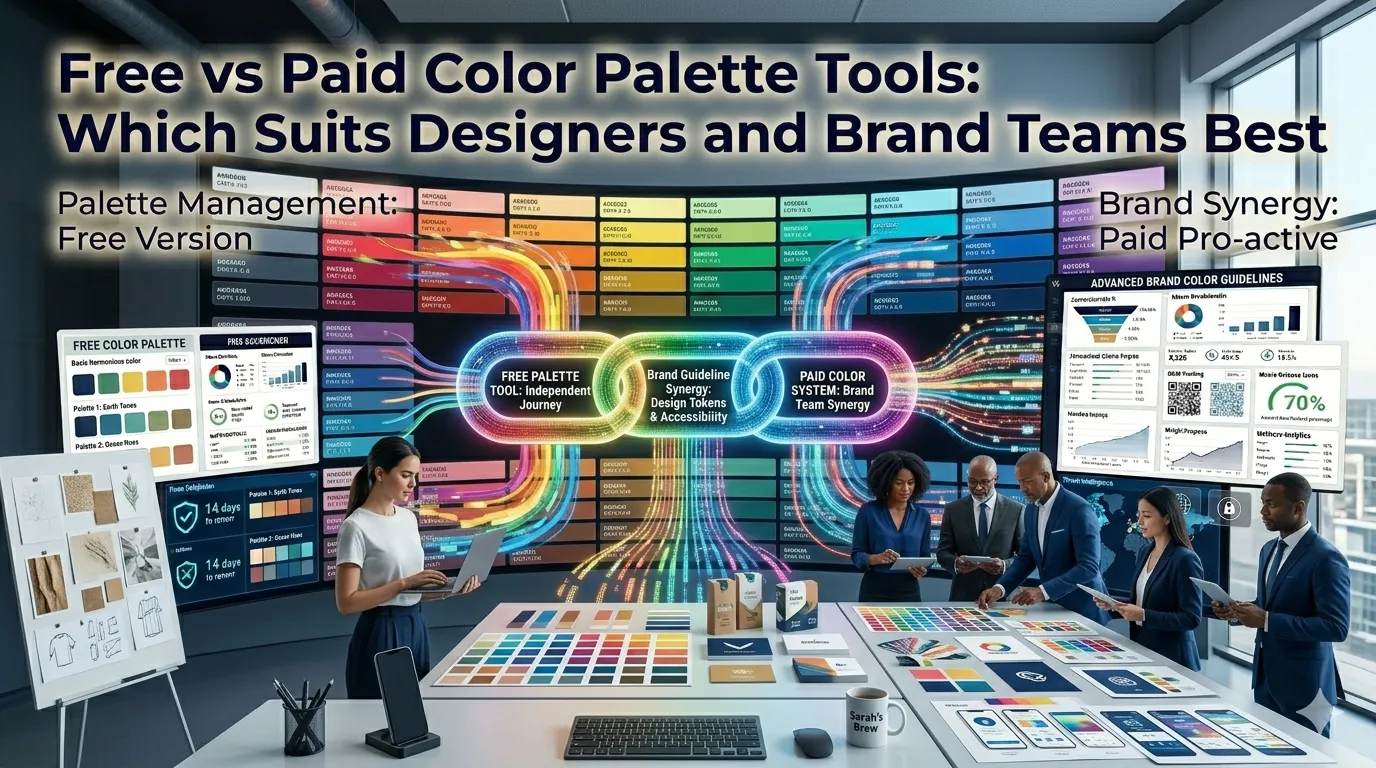
Color sets the emotional tone of every brand experience. Comparing free vs paid color palette tools reveals which option supports daily design tasks. This guide walks beginners through every step needed to pick wisely without overpaying.
Paid plans bundle palettes with brand kits, sharing, and asset libraries. Free generators serve up harmonious combinations instantly. The right comparison keeps creativity flowing without surprise invoices.
Why this comparison matters for every studio
Strong palettes shape how customers feel before reading a word. Choosing the right tool keeps brand consistency across web, print, and social.
Solo designers move quickly between client projects every week. Additionally, in-house teams maintain enterprise design systems with strict tokens. Such variety supports careful comparison whether your scope is small or sprawling.
Common scenarios worth comparing both options
Several creative situations call for clear evaluation. Recognize them before signing onto a paid plan.
- Launching a fresh brand with cohesive primary palettes
- Designing seasonal campaigns with related accent colors
- Translating logos into accessible web themes
- Picking colors for a nursery or home renovation project
- Coordinating wedding decor across vendors
- Documenting design tokens for engineering teammates
Step-by-step process to compare palette tools
Follow this sequence whenever a project demands new palettes. Each step keeps decisions intentional.
Define your palette goals
List the moods, contrasts, and accessibility ratios you require. Confirm whether print, web, or both matter most. Save findings inside a brand brief document.
Test both options with sample projects
Generate palettes through free and paid tools using identical seed colors. Compare harmony suggestions and export formats honestly. Document the outcomes inside the brand brief.
Score against workflow needs
Rate team sharing, asset library, and integration features carefully. Confirm whether the features actually fit daily work. Document the chosen winner inside design ops notes.
Best practices for sustainable color systems
Beyond the tool, supporting routines protect brand consistency. Apply them every quarter.
Document hex, RGB, and CMYK values inside design tokens. Pair palettes with accessibility checks for inclusive design. Refresh palettes every few years to stay modern without confusing audiences.
| Factor | Free Generator | Paid Suite |
|---|---|---|
| Cost | Zero | Subscription |
| Harmony suggestions | Common rules | Advanced algorithms |
| Brand library | Personal favorites | Team workspaces |
| Accessibility | Manual contrast checks | Built-in audits |
Tools that simplify the entire workflow
Many free tools rival premium options for daily tasks. Bookmark a favorite for every brand kit. Premium suites still help large agencies with complex collaboration needs.
Try our Color Palette Generator directly inside your browser without sign-up. Need to convert palettes for code? Pair it with the Hex to RGB Converter for clean design tokens. Designers also love combining it with the Favicon Generator.
Common mistakes beginners should avoid
Several pitfalls trip up new designers. Watch out for these traps before launching new looks.
- Choosing palettes without accessibility contrast checks
- Trusting trendy colors without testing brand context
- Forgetting to document design tokens for engineering teams
- Mixing palettes across campaigns without clear ownership
- Paying for collaboration features the team rarely uses
When premium suites still earn their keep
Large studios with intricate design systems benefit from premium suites. Confirm those features serve daily workflows. Otherwise free tools suit most solo and small-team designers.
Pair the workflow with our Lorem Ipsum Generator when prototyping copy. Steady comparison, intentional choices, and shared documentation turn palette work into manageable detail. Each evaluation supports the next confident launch.