
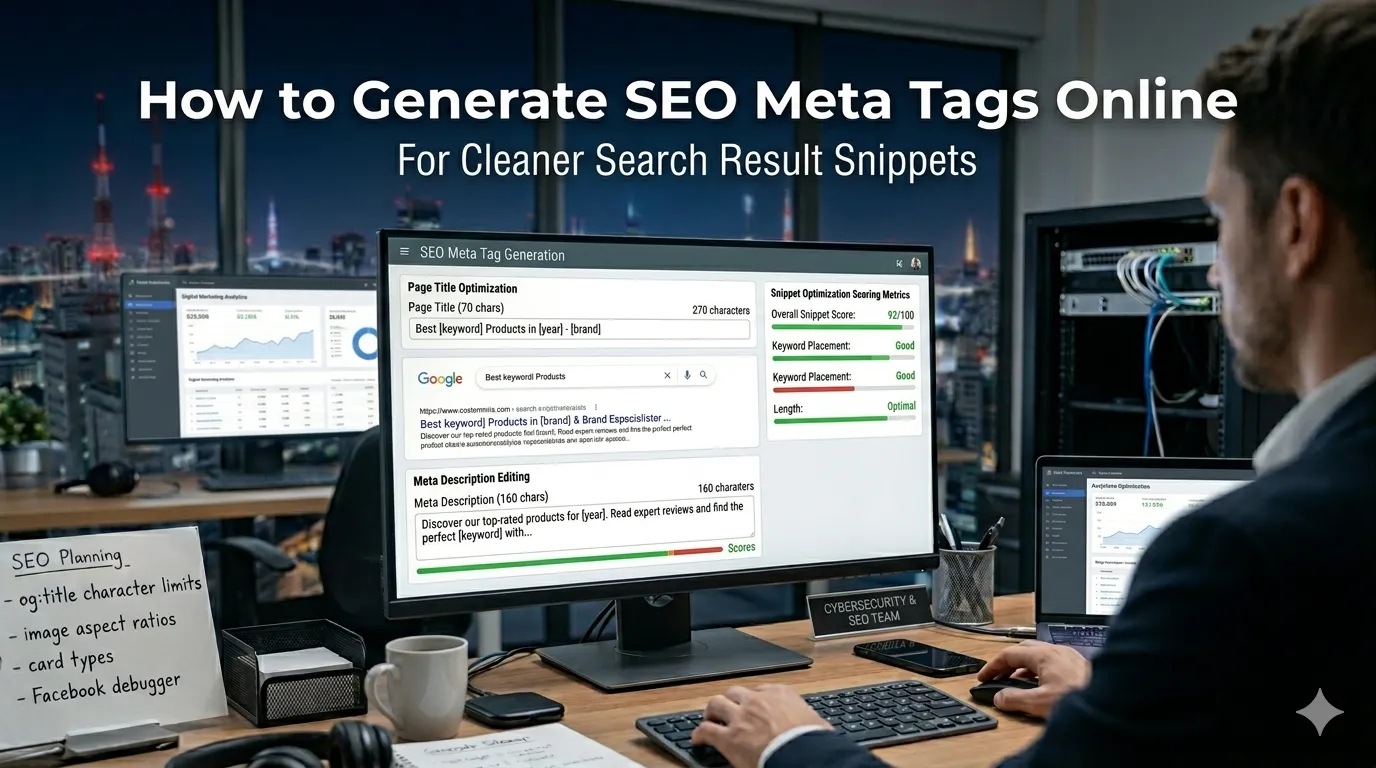
Search snippets shape the first impression every page gives potential readers. Learning to generate SEO meta tags online keeps every listing on Google polished. This guide walks beginners through every step needed to craft tags that boost click-through rates.
Default meta tags often appear too long or accidentally truncated. Generators help you match Google’s expected character counts without manual counting. The right approach keeps your page descriptions compelling.
Why meta tags matter for every page
Clear titles and descriptions drive higher click-through rates from search results. Strong tags also reduce bounce rates because visitors find the topic they expected.
SEO teams audit meta tags quarterly to keep rankings strong. Additionally, social platforms use the same tags when previews appear in shares. Such consistency supports growth whether you launch monthly or weekly.
Common scenarios that benefit from quick generation
Several content situations demand fresh meta tags. Recognize them and reach for a generator immediately.
- Updating blog descriptions after major editorial refreshes
- Publishing landing pages tied to seasonal marketing campaigns
- Auditing legacy posts that never received optimized snippets
- Localizing pages across regional language versions
- Building product listings inside e-commerce catalogs
- Coordinating PR releases with consistent shareable previews
Step-by-step process to generate SEO meta tags
Follow this sequence whenever a page goes live. Each step protects search performance.
Identify the focus keyword
Pick the primary phrase you want the page to rank for. Confirm it appears inside the title, slug, and first sentence. Save the focus keyword inside content briefs for consistent reuse.
Use a trusted generator
Pick a tool that previews tag length in pixels and characters. Aim for titles between 50 and 60 characters and descriptions near 150. Save the output inside your CMS once the preview looks ideal.
Match intent and tone
Write descriptions that promise the value the page delivers honestly. Avoid clickbait or vague language that frustrates real readers. Save effective patterns inside an editorial swipe file for future posts.
Best practices for sustainable meta hygiene
Beyond the generator, supporting routines protect rankings. Apply them every publishing cycle.
Document tag templates inside your editorial style guide. Audit older posts quarterly to refresh outdated tags. Pair the workflow with rank tracking to confirm changes deliver wins.
| Element | Recommended Length | Smart Tip |
|---|---|---|
| Title tag | 50-60 characters | Front-load keyword |
| Meta description | 140-160 characters | Include CTA |
| Open Graph title | 60 characters | Match emotional hook |
| Twitter title | 70 characters | Use brand voice |
Tools that simplify the entire workflow
Manual character counting drains energy quickly. Dedicated generators automate length checks and previews. Bookmark a favorite for every editorial sprint.
Try our Meta Tag Generator directly inside your browser without sign-up. Need clean URLs alongside? Pair it with the Slug Generator for matching snippets. Editors also love combining it with the Word Counter for headline checks.
Common mistakes beginners should avoid
Several pitfalls trip up new editors. Watch out for these traps before publishing.
- Writing duplicate descriptions across many pages by accident
- Stuffing keywords without telling a clear value story
- Forgetting to refresh tags after editorial pivots or rebrands
- Letting CMS defaults override carefully crafted meta tags
- Skipping mobile previews that often differ from desktop versions
Turning tags into measurable wins
Strong tags compound into higher impressions and clicks over months. Pair generation with analytics to track which patterns succeed. Encourage every writer to follow the editorial standard consistently.
Pair the workflow with our Open Graph Generator for matching social previews. Steady habits, accurate counts, and disciplined storytelling turn meta tags into reliable growth. Each generated snippet supports the next confident click.